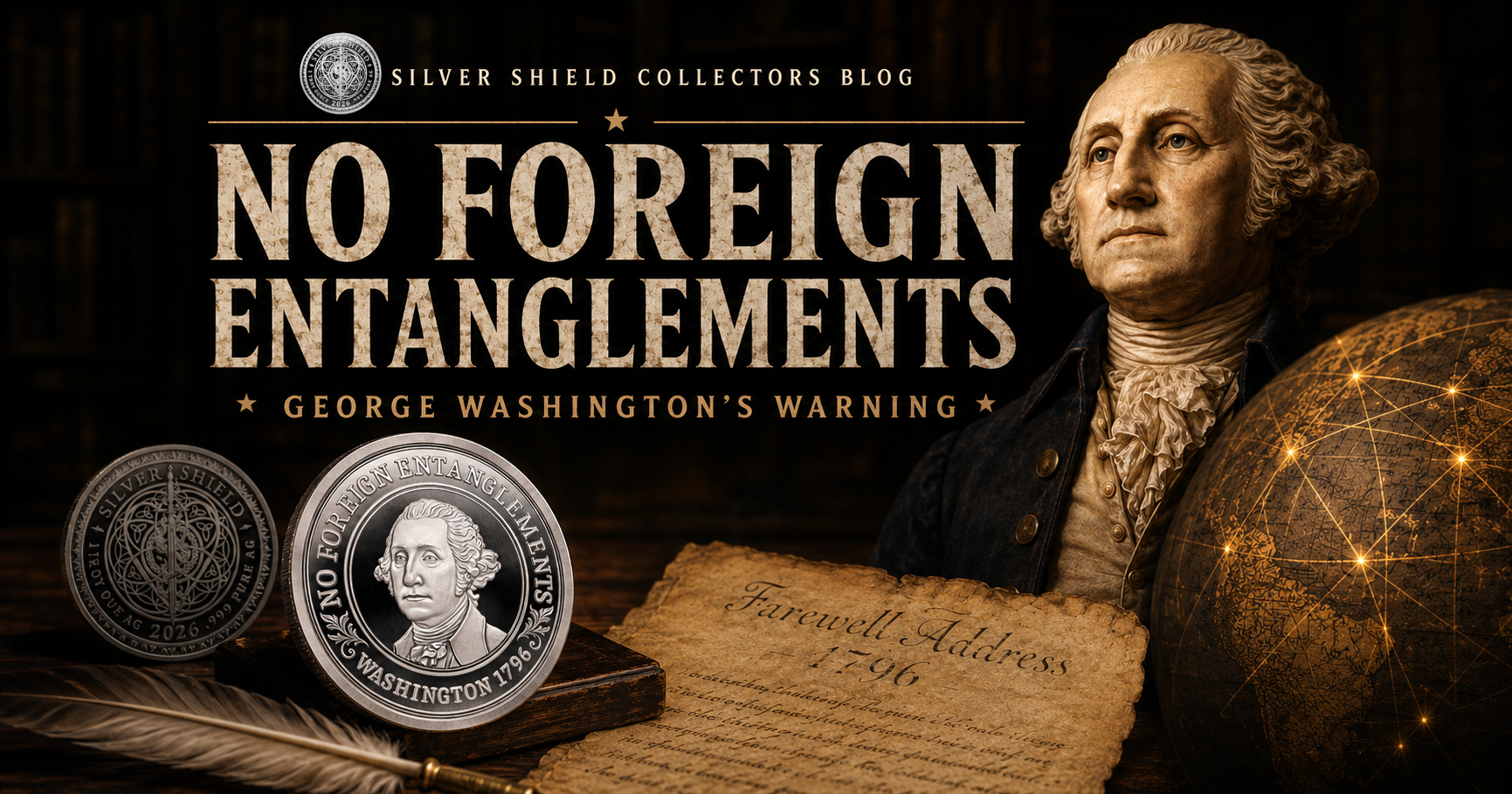
The phrase, some things never change, has become a cliche. And Chris’ new round, No Foreign Entanglements, is an emblematic example of this concept. Despite George Washington’s admonition during his farewell address in 1796, where he warned, “steer clear of permanent alliances with any portion of the foreign world”, America has rarely been able to mind its own business.
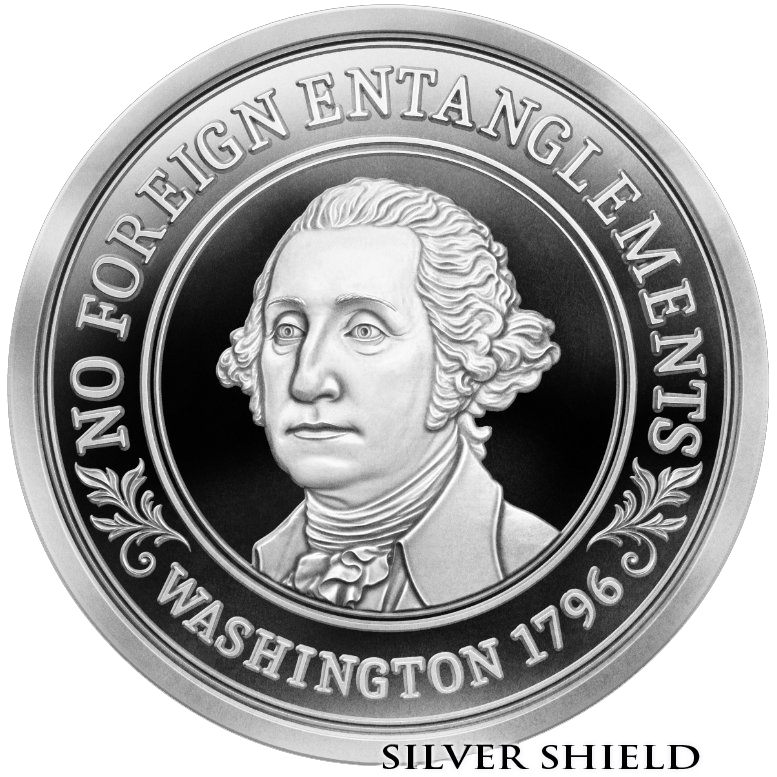
2026 "No Foreign Entanglements” Silver Proof Coin, by Chris Duane
Our history is riddled with examples of international intrigue, interference, or simply, sticking our nose into other people’s business. Granted, there are an equal number of cases where we were left with no other choice but to get involved in the affairs of other countries. These included when Thomas Jefferson decided, upon the conclusion of the three-year naval Quasi-War with France, to negotiate for the acquisition of most of the French held land west of the Mississippi River resulting in The Louisiana Purchase (1803) or when Andrew Jackson signed the Adams-Onis Treaty (1819) annexing Florida from Spain after 36 years of conflict.
The Spanish-American War (1898) continued those efforts and resulted in Spain ceding Puerto Rico, Guam and the Philippines to the United States. The Texas Revolution (1835) accomplished the same goals but removed Mexican rule from vast areas along our southern border, including most of Texas.
Another example, although it did not rise to the level of war, was The Alaskan Purchase (1867). This involved both Russia and England’s internal affairs. We wanted Alaska because it was considered at the time to be a shipping gateway to the vast Asian markets. When Secretary of State William Seward negotiated the transfer of Alaska from Russia to America, it was done because Czarist Russia did not want it to fall into the hands of their enemy, the British. One hundred years later, ironically and fortuitously, Alaska became our largest military blockade against Communist Russia’s aggression during The Cold War, which lasted from 1945 to 1991.
So, yes…when defending our own turf, or areas directly surrounding our country, we have routinely interfered with many other country’s foreign policies. Particularly when their actions, intentions or plans threatened our national security or sovereignty. Defending America from foreign interference, invasion or intrigue has been a cornerstone of the United States’ foreign policy, and to this end, we have done a remarkable job.
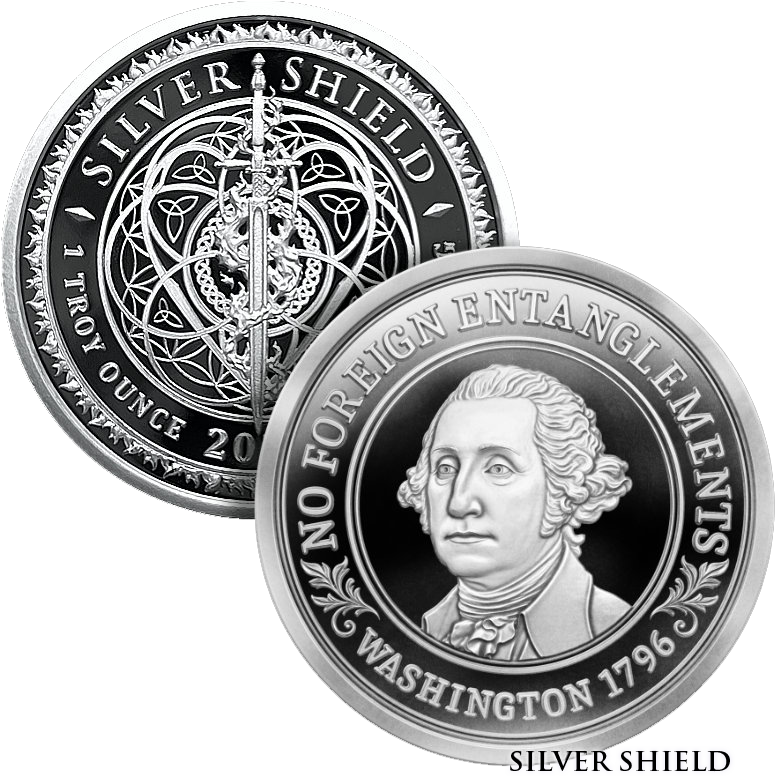
2026 “No Foreign Entanglements" Silver Proof Coin, by Chris Duane
World War I and World War II changed the focus of our foreign policy. We were no longer concentrating on securing our own terrain but, due to our country's newly acquired, and enormous, wealth, which was accumulated during the Industrial Revolution, we began to help our European friends defeat their German invaders. We did not get into those two world wars lightly. Americans had become isolationists and had no interest in the problems brewing in Europe.
America waited two years and eight months before entering the First World War. Our entry into the war was done with trepidation. And, It was only undertaken after Pres. Wilson acknowledged that the loss of the Russian Baltics, Belgium, Romania and Luxembourg to Germany was a threat to American interests in the region. It was at that point that he finally offered military aid to our allies in the region. With our assistance, which began on April 6, 1917, Germany was defeated in just one year, bringing the war to an end on November 11, 1918.
The Second World War began in 1939 and was a repeat of the First World War. But this time, the most powerful European countries, including both France and England began to collapse under the German onslaught. In just two years, Poland, Denmark, Norway, Luxembourg, Netherlands, Belgium, France, Yugoslavia, Greece, Austria and Czechoslovakia all fell to German aggression. And the devastation inflicted on their people, and their historic cities, was horrific.
Unable to defend themselves from the German military juggernaut, one European country after another capitulated. But it took the imminent demise of England in December of 1941 before President Roosevelt reacted to the destruction taking place in Europe. Only then did he intercede. Thankfully, after four more years of war, both Germany and Japan surrendered to the Allied Powers, led by America, in May of 1945.
Although there was 20 years of peace between World War 1 and World War 2, we seem to be getting into conflicts every few years since then. We started again with our involvement in the Korean War (1953). Then came the Vietnam War (1955-75) followed by the Persian Gulf War (1991), the Kosovo War (1999), the War in Afghanistan (2001-2021), and the Iraq War (2003-2011).
Campaigns and interventions include the Bay of Pigs Invasion (1961), the Invasion of Granada (1983), the Invasion of Panama (1989) and the interventions in Somalia, Libya and Syria, which took place from the 1990s into the 2010s.
Today, with the current war with Iran, we are continuing our legacy of chronic meddling in other countries foreign affairs. And yes, preventing crazy people from getting nuclear weapons is honorable, but many Americans are just plain, war-weary.
And to make matters worse, despite the fact that we are trying to keep the world safe from lunatics, we are bearing all of the burdens of this war alone. Inexplicably, our “allies” have not been there for us when we needed them.
How is it that we are becoming the sole defender of decency on earth?
There has to be a better way and George Washington would agree that Chris’ new strike, No Foreign Entanglements, points us in the right direction.
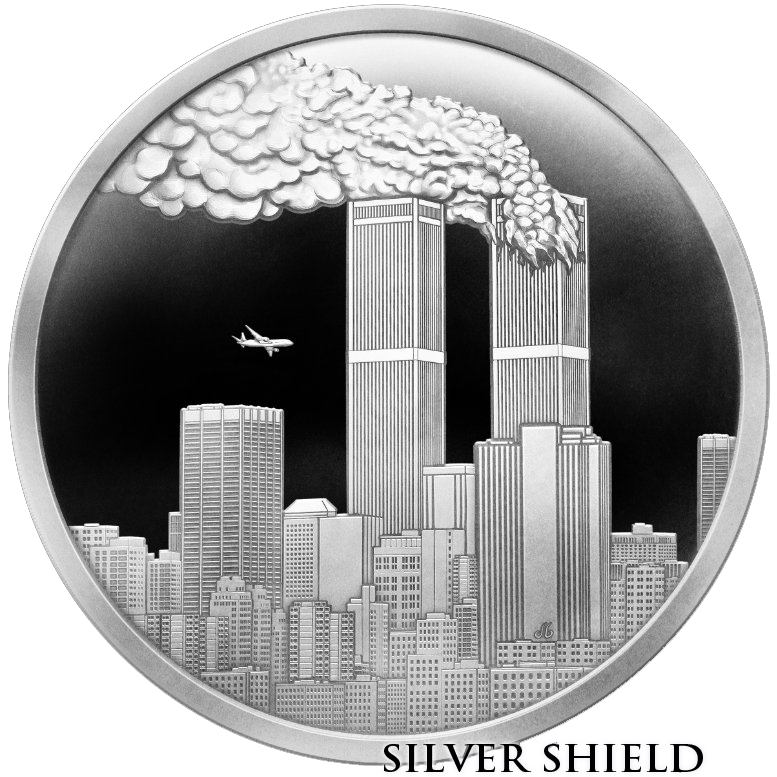



































Other Silver Shield Proof Round releases