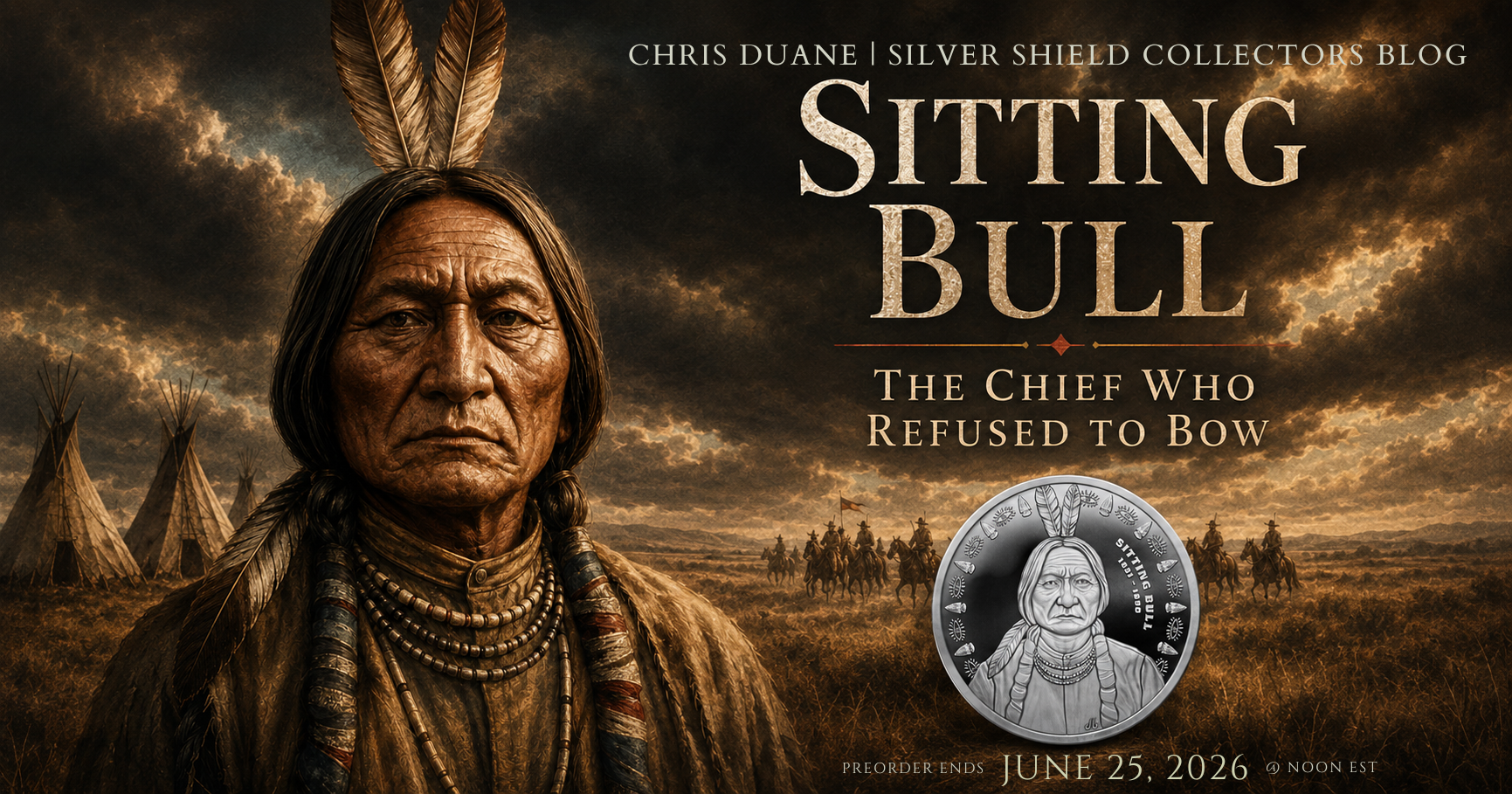
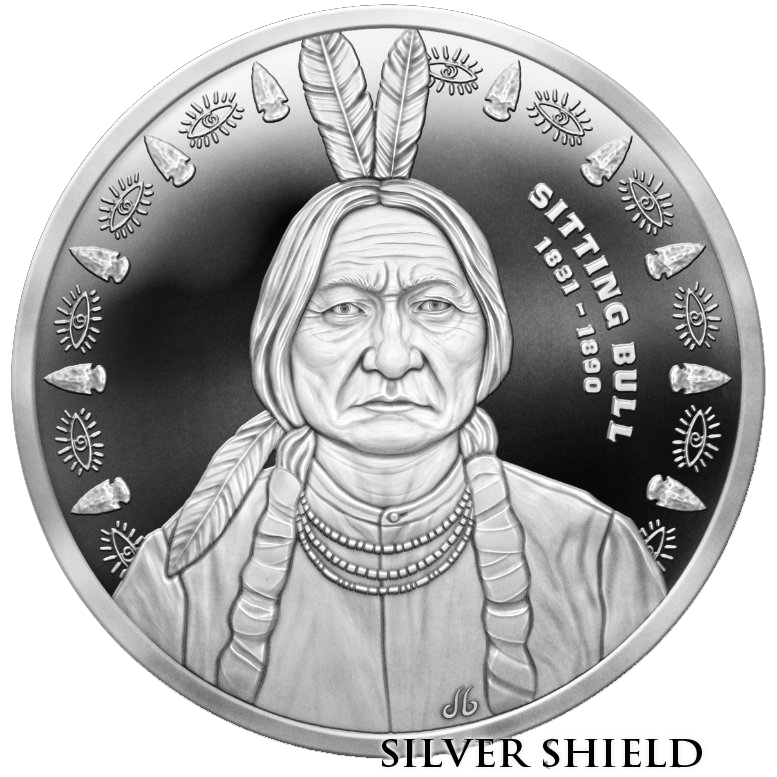
Chris’ new release, Sitting Bull, immortalizes one of the Indian Nations greatest chiefs. He is remembered as part of American history because he was the leader of the Lakota warriors, including Crazy Horse, who defeated General Custer during the Battle of Little Big Horn in 1876.
2026 "Sitting Bull" Silver Proof Coin, by Chris Duane
Sitting Bull was a member of the Lakota tribe and was born around 1835. Legend has it that he was born along the Yellowstone River in Montana. He was called “Jumping Badger” by his father Jumping Bull and later “Slow” by his friends because he was very cautious.
A Name Earned Through Courage
After a successful raid to steal horses from the Crow Indian encampment, where the 14 year old, Jumping Badger, proved himself to be both brave and cunning, his father honored him with the name Buffalo Bull Sitting Down. Americans have shortened it to Sitting Bull and he would go on to become one of the fiercest defenders of his way of life.
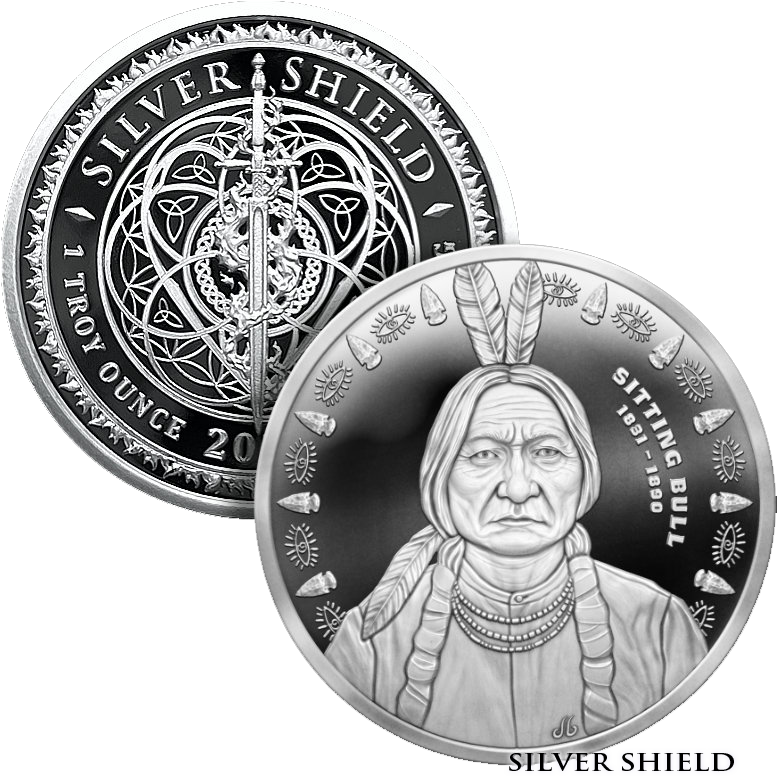
2026 "Sitting Bull" Silver Proof Coin, by Chris Duane
As European American pioneers trudged westward, they encountered many Indian tribes. In 1875, it was estimated that there were approximately 300,000 Indians living in America. Many of these tribes were unconcerned about the push west by the “white man”. Others were violently opposed to the arrival of the settlers and took every opportunity to discourage their forward motion across the plains by attacking and killing them.
The Westward Push and the Rising Conflict
During the Dakota War of 1862 alone, bands of eastern Dakota Indians killed 500 settlers in Minnesota. That included men, women and children. In total, there were approximately 6,000 white American civilians killed by raiding Indian parties during the 19th century. But, if the military casualties are included, 19,000 white people were slaughtered.
Many of the Lakota’s dead victims, including women and children, were ritually scalped, disemboweled, stripped, looted, eardrums pierced, throats slit and limbs severed. Once the battle was over, most of the mutilation was undertaken by the women of the tribe.
If captured alive their victims would be severely beaten, staked to the ground, burned with hot coals or flayed. Although the Lakotas mutilated their victim’s bodies, unlike the Comanche, they did not flay the dead. This was all undertaken to scare white settlers. The Indians wanted their white victim’s mutilated remains to act as a warning to newly arriving settlers, to stay away.
The Lakota Chief Who Led Without Bowing
Due to Sitting Bull’s excellent leadership qualities, and extraordinary skill and bravery he became the Supreme Chief of the entire Lakota Nation. This was a challenge unto itself because the various branches of the Lakota tribes were fiercely independent. As a result, it was an enormous vote of confidence when they elected Sitting Bull as their Supreme leader.
Sitting Bull, like our American generals, rarely took to the battlefield. He remained in camp, but was the Lakotas spiritual leader, tactical commander and advisor. Indians did not erect fortresses, so it was Sitting Bull's immediate responsibility to defend the women and children, who remained in camp with him, if the battlefield converged on their camp as well.
Little Bighorn and the Shock That Followed
The Battle of Little Big Horn, where 7,000 Lakota Indians attacked 700 men in General Custer’s regiment, and where all 150 men under Custer’s direct command were slaughtered, incited general horror. But, the discovery of the savage mutilation of the soldiers' bodies, including the decapitation and disembowelment of soldiers and the puncturing of Gen. Custer’s eyes and ears enraged the US Army leaders to levels of vengeance not seen before.
The horror and heroics of “Custer’s Last Stand" would reverberate across the nation and around the world. The US Army was spurred into action as it undertook its “scorched earth” campaign to clear the country of ruthless, vicious Indians.
Sitting Bull was a principal player in these incessant raids against white settlers.. When he was finally located, he refused to surrender despite many overtures by the US Army commanders. In an effort to avoid capture, he and 175 members of his tribe fled into Canada where the Canadians refused to support him as well. So, the tribe began to starve in Canada’s harsh climate and they finally returned to America four years later on July 19, 1881. Sitting Bull surrendered to US authorities the next day.
From Prisoner to American Celebrity
Despite the horror that Sitting Bull, and his tribesmen, had inflicted on innocent Americans during the many battles he fought with them, his courage, bravery, leadership and cunning were still admired by many people.
In fact, although Sitting Bull was a political prisoner confined to his reservation in South Dakota, he became a cultural hero for many Americans. And as such, he was invited to join Buffalo Bill Cody’s famous Wild West Show in 1885. He was a huge success, drew thousands of curious people to the show and became a lifelong friend of the famous 23-year-old female, sharp-shooter, Annie Oakley. Sitting Bull became a commercial success as well because he retained the rights to sell his photographs and autographs.
In 1890, while still living on the Standing Rock Indian Reservation in the Dakota Territory, Sitting Bull was suspected of inciting the tribes to rebellion through the Ghost Dance. This dance was spreading discontent throughout many Indian reservations and called for the return to traditional Indian ways, the rise of the buffalo and the ouster of the white man.
The US Indian Agent at the Standing Rock Reservation, James McLaughlin, ordered the 59-year-old Sitting Bull’s arrest in a pre-dawn raid on December 15, 1890. But, he refused to go quietly and the reservation was awakened. Sitting Bull then rejected the efforts made to remove him from his cabin and again when told to get on his horse.
As tensions rose, a scuffle ensued and a member of Sitting Bull’s tribe shot one of the Indian Agency’s police officers through the shoulder. This prompted a retaliatory shot, which instantly killed Sitting Bull. The melee that resulted left 14 men dead and included both Indians and police officers.
The Meaning Behind Chris Duane’s Sitting Bull Release
Chris’ round, Sitting Bull, continues his Indian Chiefs series. -And this strike, like the others, shows a proud, heroic and confident Indian Chief. Despite the controversy that surrounded his life, no one can deny that Sitting Bull was that man.

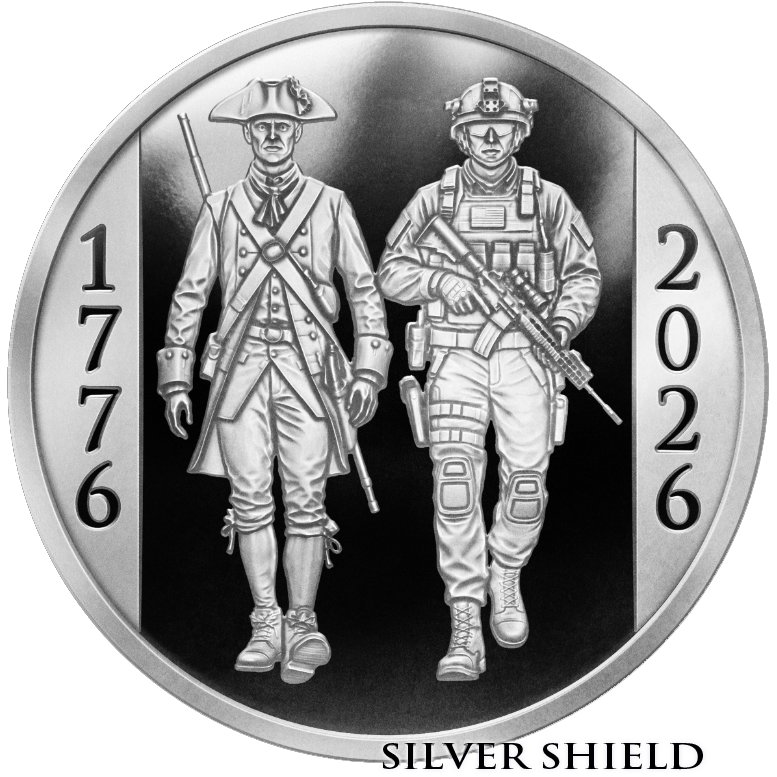
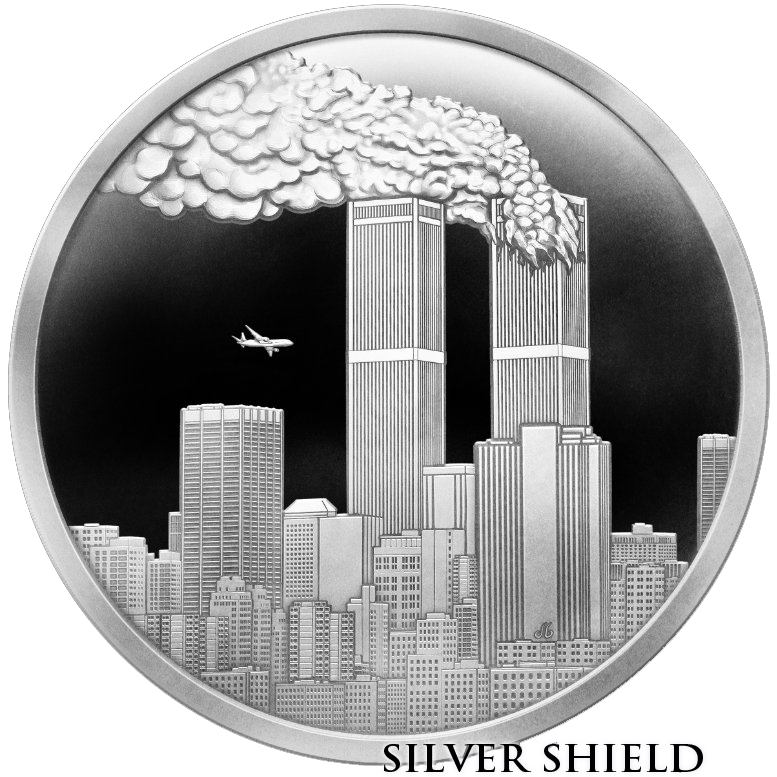







































Other Silver Shield Proof Round releases