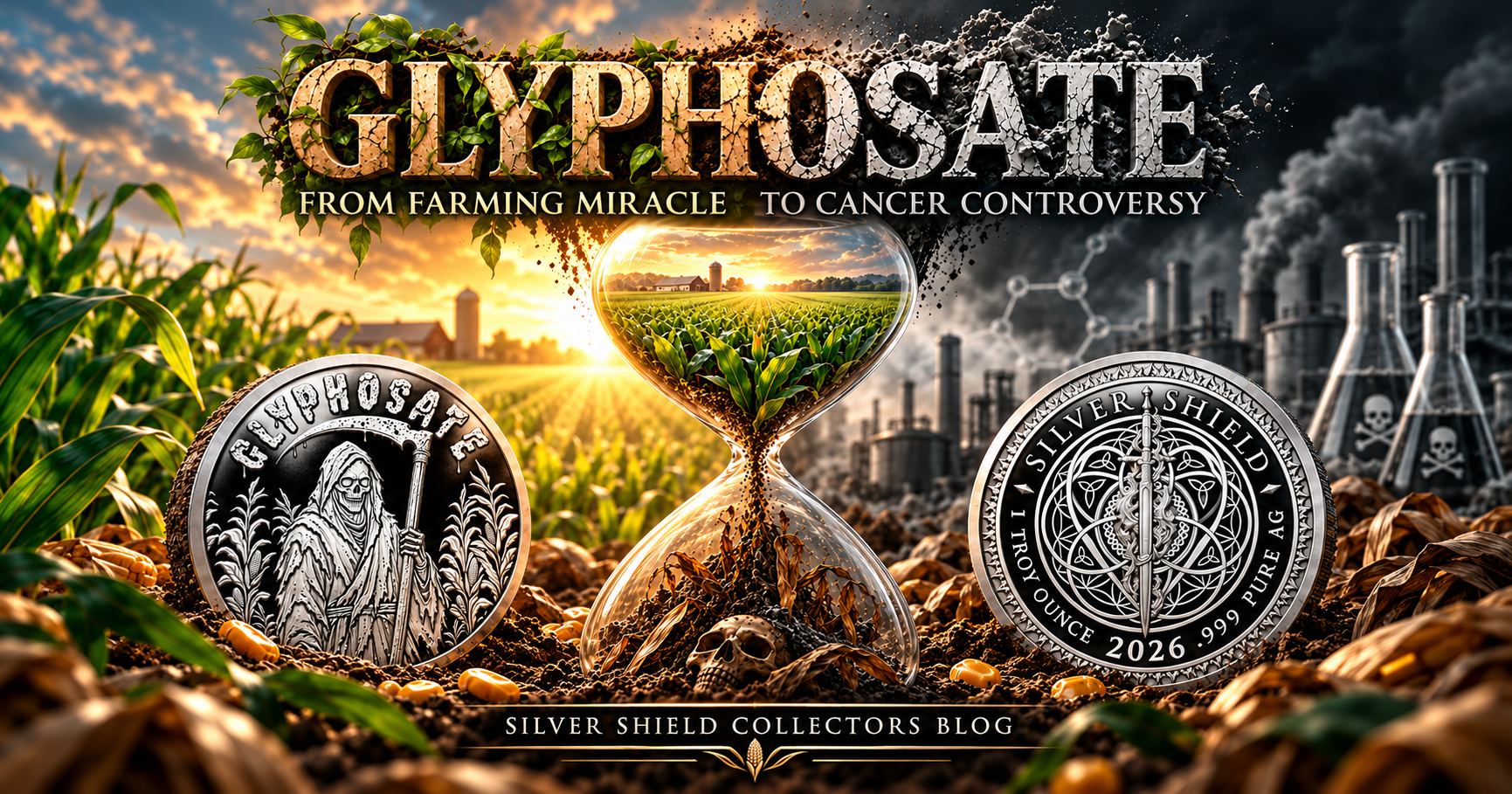
Herbicides, particularly glyphosate, were considered a marvelous invention when they were developed in the 1970s. They dramatically reduced the manpower needed to control the weeds on farms. And, another advantage was that the weeds were no longer sapping needed moisture from the crops and the soil.

2026 “Glyphosate” Silver Proof Coin, by Chris Duane
Glyphosate was first synthesized in 1950 by a Swiss chemist named Henri Martin. He was working for a pharmaceutical company named Cilag. His discovery was considered a failure as it had no medical applications. As a result, it was shelved and soon forgotten.
The molecule glyphosate was rediscovered in 1964 by an American chemical company, Stauffer Chemical Co., at its research center in Richmond, California. Researchers Toy Arthur Dock Fon and Eugene Urling are credited with the discovery that glyphosate was an excellent descaler. It could effectively strip scale and minerals from boilers and pipes and it was readily introduced, and accepted, on the market.
Eight years later Monsanto chemists Dr. Phil Hamm and Dr. John Franz discovered that glyphosate was an excellent herbicide. It was brought to market as Round-Up. Over the next two decades Monsanto genetically engineered corn and soybean crops in order to make them completely resistant to Round-up. This allowed farmers to spray Round-Up directly onto their fields without injuring the crops. This revolutionized farming.
When Monsanto’s patent expired in 2000, many other companies developed their own chemical solutions and brands. These include Touchdown, Durango and Makaze, which were developed for large-scale farmers. There were other companies who developed products specifically for homeowners, including Killzall, Farm General and Eraser.
Fast forward 15 years, and the International Agency for Research on Cancer (IARC), which is a branch of the United Nations World Health Organization, released a report stating that glyphosate is “probably carcinogenic to humans.” This set off an avalanche of lawsuits worldwide from farmers, landscapers and groundskeepers. Many of whom claimed that they got cancer from glyphosate, specifically non-Hodgkin's lymphoma.
Today, there remains a great divide among the experts but most agree that homeowners are at little risk from glyphosate induced cancer and people who consume corn or soy are at the least risk. The United State Dept. of Environmental Protection Agency (EPA) and European Food Safety Authority (EFSA) asserts that there is no proven causal connection.
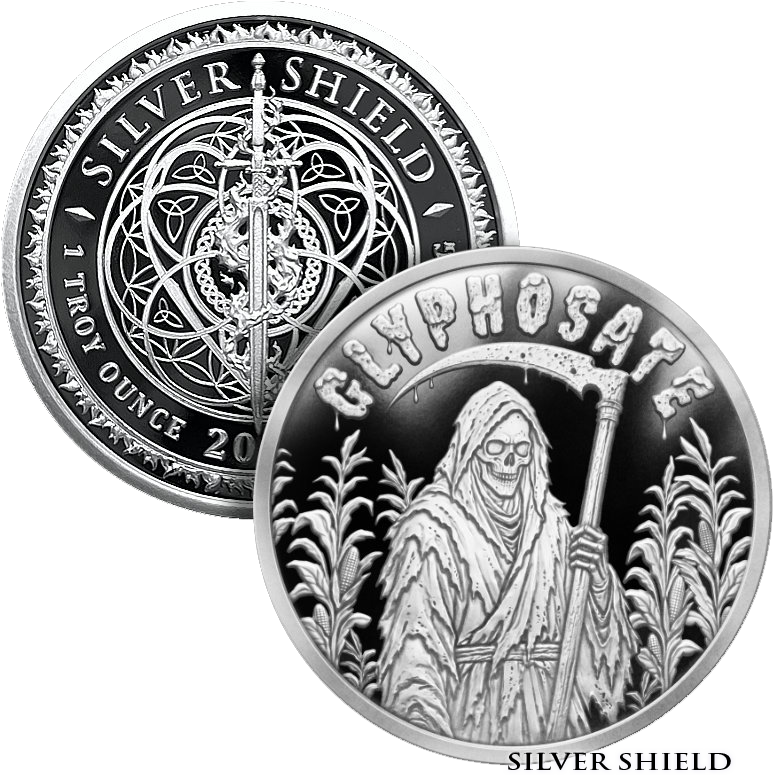
2026 “Glyphosate" Silver Proof Coin, by Chris Duane
While AIRC is committed to the other side of the argument. They claim that there is a 41% increased risk of developing non-Hodgkin’s lymphoma for the people who are exposed to the chemical on a regular basis, including farmers, professional landscapers and groundskeepers. They also believe that the chemical causes DNA and chromosome damage and destructive oxidative stress to white blood cells.
Until the long-term research is concluded, the jury is still out on the dangers associated with the use of glyphosate. But, until then, the experts all agree that the users of the chemical must explicitly follow the application directions on the product’s label.
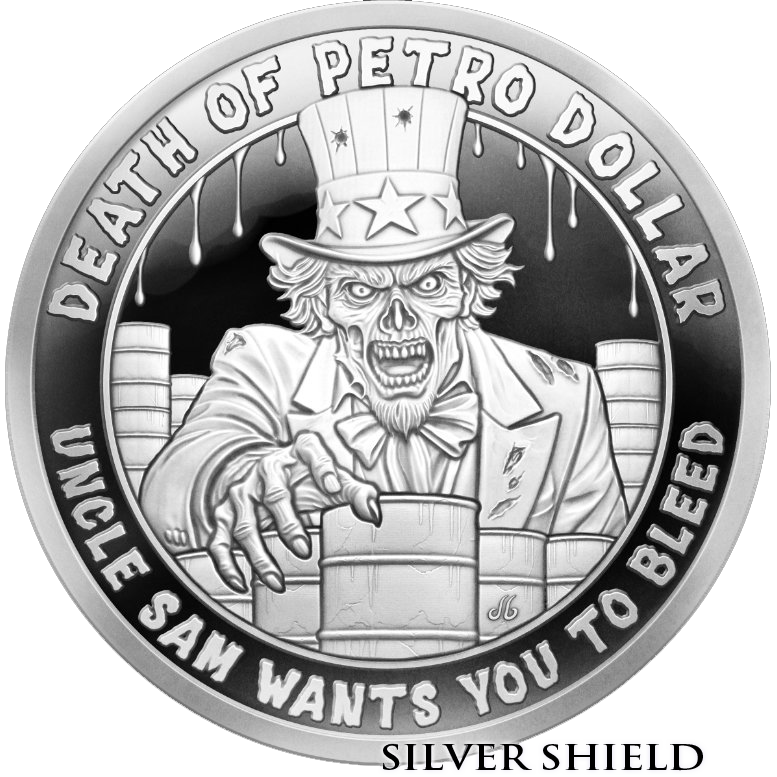
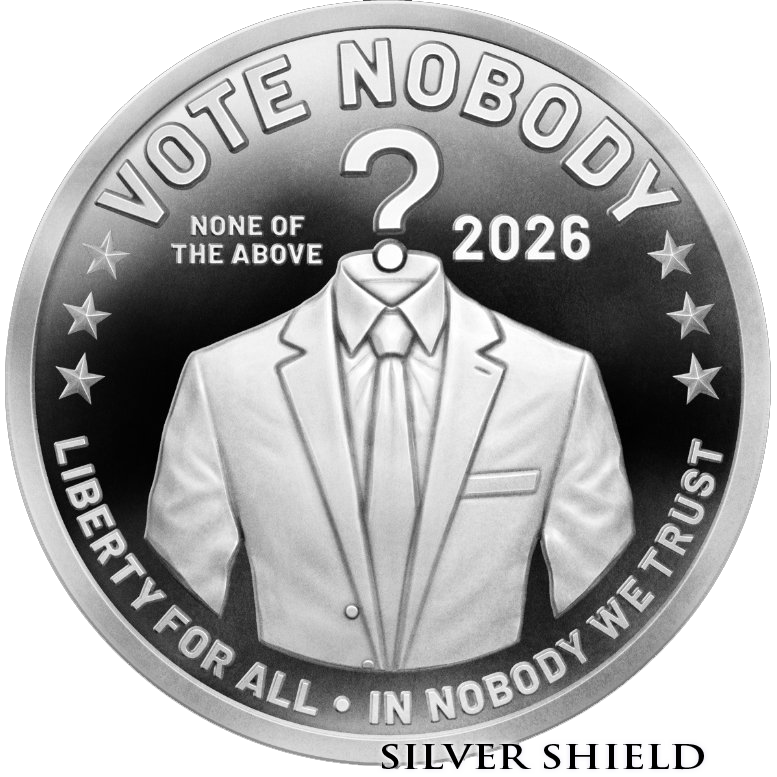
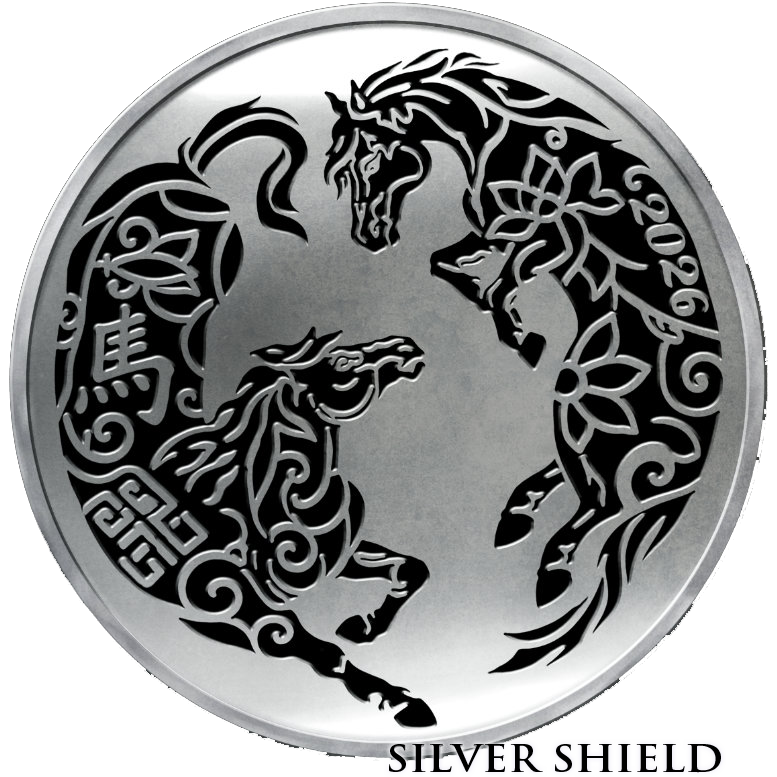
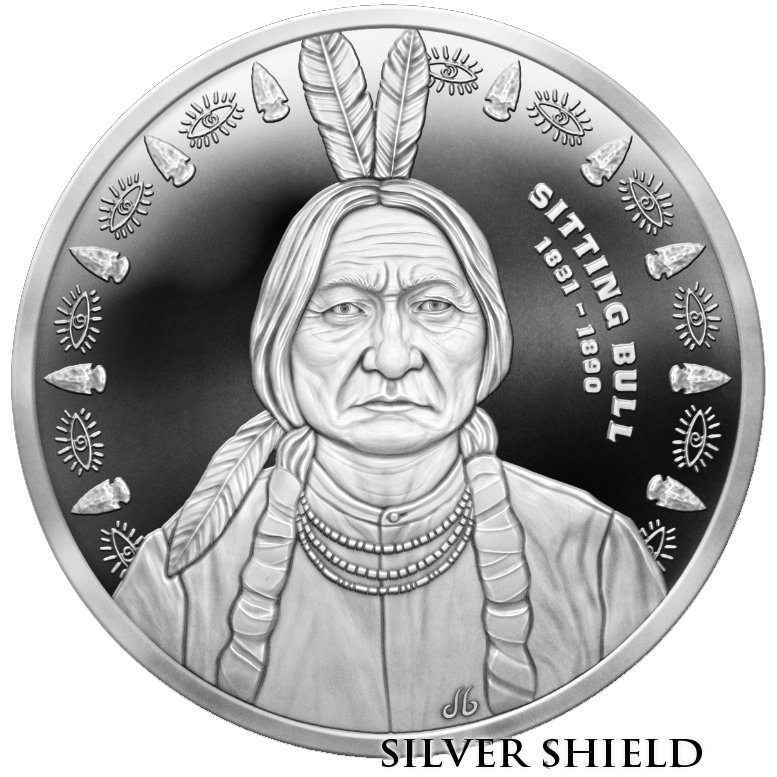
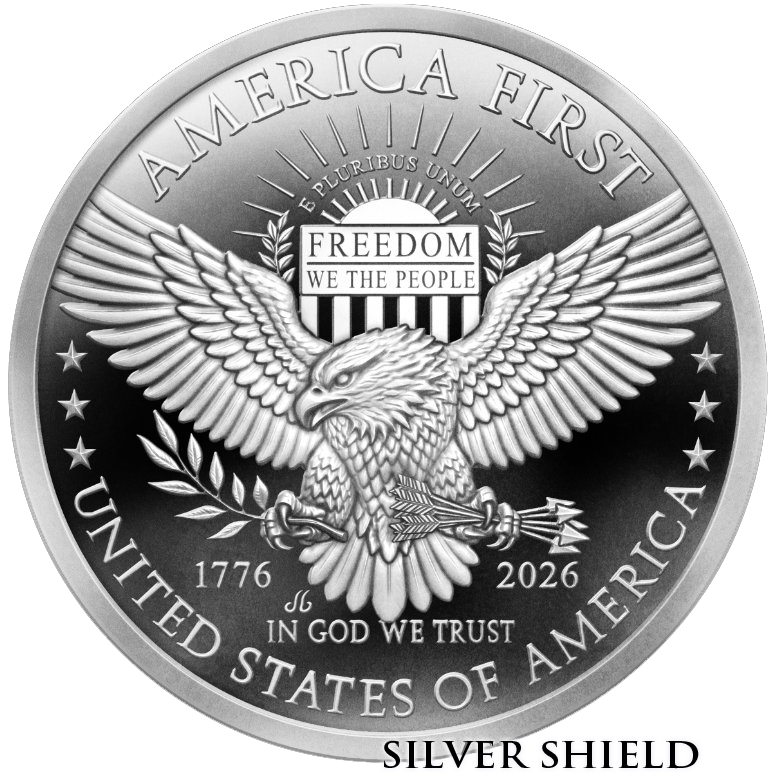























Other Silver Shield Proof Round releases