
Have you ever wondered why there are so many old, beautiful, and enormous residential mansions in the United States that are no longer occupied, open to the public and owned by the state? Have you ever been curious about what happened to the men, and their families, who originally owned and built them? Have you wanted to better understand why the families no longer live in them and where everybody's gone? Have you asked yourself why the families would abandon such wonderful homes?
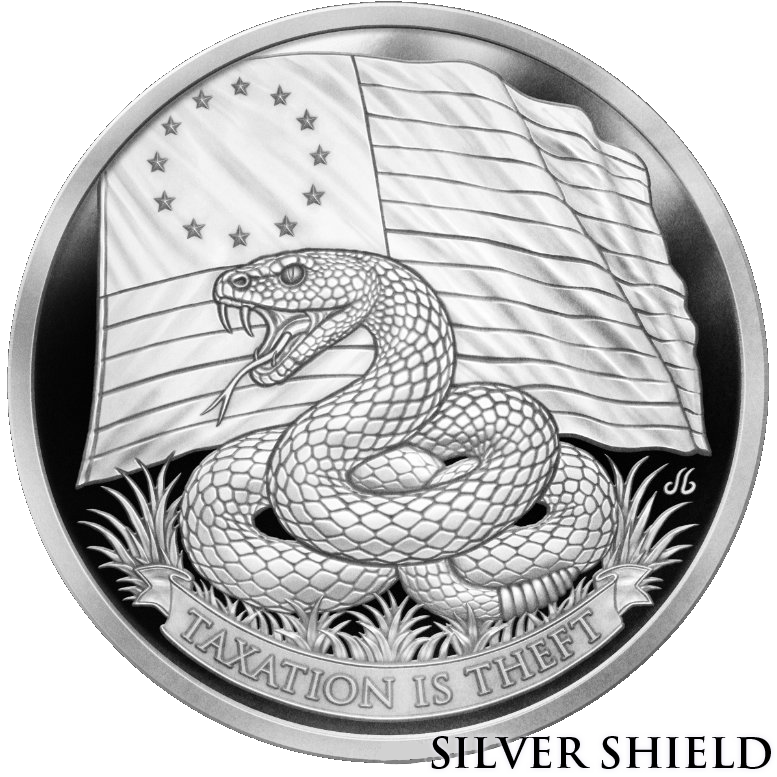
2026 “Taxation Is Theft” Silver Proof Coin, by Chris Duane
Well, the answer is simple. As Chris’ new release, Taxation is Theft, so clearly states, the great industrialists, including Vanderbilt, Carnegie, Rockefeller, Morgan and Ford, who built enormous American businesses, and also built some of the most spectacular, and stunningly gorgeous, homes in the world, were taxed out of their homes by their own government, starting with the implementation of the Federal Income Tax in 1913. This attack literally threw the families out of their homes, some within one generation.
Although the initial top tax rate was just 7% in 1913, it rose to 77% in 1918 and this was when the most successful entrepreneur’s money was stolen on the pretense of funding WWI. John D. Rockefeller, Sr., who was fiercely opposed to the tax stated, “that the public had no moral claim to a self-made man’s fortune”. And the deck was so severely stacked against these men that, shockingly, when Rockefeller was forced to pay the income tax in March 1914, he paid 2.8% of the entire tax revenue of the country by himself.
These men were punished for their success! They were not wastrels, gad-a-bouts or extravagant. They did not “deserve’ to be vandalized! In fact, they actually spent very little of their fortunes on themselves. This stemmed from the tenets of their Protestant faith.
Rockefeller, and many other manufacturers and industrialists, were all devout Protestants. And, as such, they were actually forbidden to squander their income and especially not on themselves. Instead, as dictated by their faith, they viewed themselves as stewards of their God-given wealth, and as such, they wasted nothing, often denying themselves the luxuries they could have easily afforded to lavish on themselves.
Their Protestant Work Ethic drove them onward and upward, while never permitting them to fritter away one red cent of their accumulated wealth. For Baptists, Presbyterians, and Calvinists, it was actually considered a sin to spend money on oneself.
So, as a result, these Protestant industrialists saved it, invested it in their businesses, and built churches, universities, theaters, libraries or spent it on their families. Rockefeller once said, “I believe the power to make money is a literal gift from God…to be developed and contributed to the good of mankind”. Carnegie believed that it was a rich man’s obligation to live modestly, avoid extravagance and become a steward of the community.
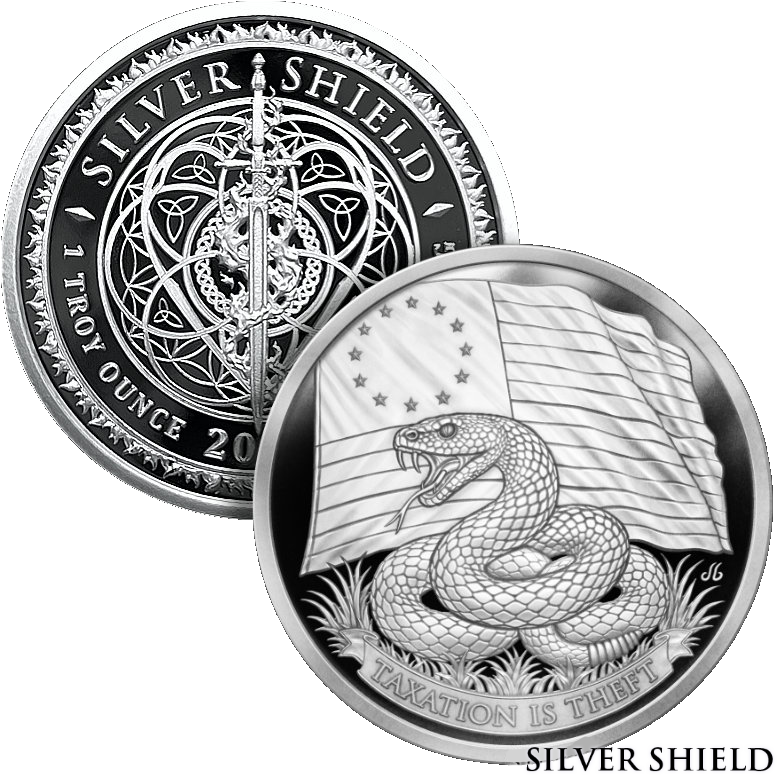
2026 “Taxation Is Theft" Silver Proof Coin, by Chris Duane
These men were not the “Robber Barons” that the liberals proclaimed them to be. They were instead good, productive, generous and brilliant men who were robbed blind by short-sighted bureaucrats whose salaries they paid.
These were men who had built something from nothing, employed millions of people and were now “rewarded” for their tireless efforts with the theft of their income and for purposes against which they were opposed. They thus became victims of the legalized theft which was perpetrated against them by their own government.
This was the beginning of the wealthy men taking advantage of the loophole in the new income tax law which allowed them to move their money into tax exempt charitable, religious or scientific entities.
Rockefeller aggressively pursued every avenue available to him to keep the government from absconding with his hard-earned wealth. In this effort, he established the Rockefeller Foundation which allowed him to continue to do good, as he saw fit, while also legally salvaging his wealth for his children and grandchildren.
Although these men made millions, their businesses also required massive amounts of capital in order to expand, grow and to sustain them. So, what looked good on paper, was not actually for the men themselves but for future expansions, increased labor costs and material purchases. The fact is, that these men reinvested between 75-90% of their corporate earnings, year after year after year, back into their businesses. This allowed them to grow their companies and to stay competitive..
These men did not squander their vast incomes. In fact both Cornelius Vanderbilt, and John D. Rockefeller, Sr., had reputations for being very cheap men. Interestingly, Mr. Rockefeller kept a small ledger in his pocket and throughout his life he religiously noted every expense he incurred during the day.
After Andrew Carnegie sold US Steel to JP Morgan, he retired, and then aggressively began to give away 95% of his wealth, while building research facilities, courthouses, museums, concert halls, libraries and universities across the nation, while also donating 7,000 new organs to churches all over the world.
But while Mr. Carnegie was building US Steel into the largest steel company in the world, he was notoriously obsessed with penny-pinching, just as was Rockefeller and Vanderbilt. He preferred to review expense sheets, rather than profit statements in order to find waste and abuse. He mcro-managed every expenditure down to the penny, thus creating one of the most efficiently run companies in history.
Many of these religious industrialists, and manufacturers, built entire factory towns for their workers, including employee housing, churches, schools, shops and medical clinics. They lived among their employees and knew everyone personally. At the peak of the Industrial Revolution (1870-1914) 16.7 million people were employed by these men. That was 25% of the population back when most people still lived on farms.
These were determined men who valued relationships, both business and personal. That all began to change as the 19th century ended and the 20th century began. It was then that jealous troublemakers started to demonize these good men.
Suddenly, envious, but influential, people began to view the wealthy industrialists' success as something of an affront. As a result, they were suddenly treated with disdain, not only by the rabble-rousers within their own troops, but also by government nitwits who literally couldn’t shine their shoes. These were small-minded, backwards people who were incapable of doing little more than loudly voicing their jealous angst while contributing nothing of value to anyone or anything.
And yet, if it were not for these brilliant risk-taker’s arduous, and exceedingly, expensive undertakings, the 14.2 million workers at their plants, mines and railroads would not have had a job. This was an even more impressive number when you consider that the entire population of the country was just 95 million people.
When the industrialists were vanquished and punished for their efforts, they stopped working so hard and, they stopped investing the money they lost and the money they were able to hold on to. No one in the government realised that when they stopped, so would the whole country. This lack of expansion and growth ultimately led to horrors of The Great Depression, where 14 million workers lost their jobs.
The income tax was instigated through despicable government overreach when Pres.Wilson cut the tariff rates in 1913 on imports from 40% down to 26%. This reduced prices for the average person and helped spawn the Roaring Twenties, but the monetary loss for the government had to be made up somehow. And, this is when the income tax was instituted.
These short-sighted people plotted and planned to abscond with our Industrial Revolution’s most brilliant men’s hard-earned money in order to fill the void without realizing that if the manufacturers and industrialists were unfairly persecuted and their businesses went down, all of their 14 million employees went down with them. You can still see the rusted remains of Carnegie's huge US Steel mill still moldering away on the banks of the Monongahela River in Pittsburgh.
These politicians, including Teddy Roosevelt, Taft and finally Wilson, were determined to punish our most successful businessmen so that they could save face. And in this effort, Roosevelt broke up Rockefeller’s Standard Oil Corporation as well. The betrayal forced the Industrial Revolution, which began in 1870, to come to a screeching halt in 1914.
By the 1930’s the government had not only destroyed their businesses but had literally taxed our country’s most accomplished, productive, and brilliant men out of their homes as well. As the years passed, it became obvious that not only had the 90% income tax destroyed their successful businesses, but it ultimately sent the country into a tailspin which resulted in the Great Depression.
Just 20 years after the federal income tax was created in 1913, the income tax rate had risen to 94% and by then, the Great Depression was in full swing. By then, even the wealthiest American industrialists were struggling to keep up financially. And, as a result, their children and grandchildren could not afford to live in the homes their fathers and grandfathers had built for them.
As a result, the heirs were forced to sell, demolish, subdivide, abandon, create house museums or donate their elegant homes to charity. Homes these men thought would stay in their families forever. Magnificent homes, just 40 years old, were bulldozed into the ground and never to be seen again. Ironically, many were sold to cover the very same taxes imposed by the government that they reviled
Denied the money that was syphoned off by the government, their businesses began to flounder. They couldn’t upgrade their mills and plants in order to stay competitive, and when the foreign market changed and the government backed unions demanded more than their fair share, they couldn’t keep up at all. The ignorant demands from inept politicians have proven again and again to always destroy the successful businesses that they do not understand nor could they operate.
The Great Depression devastated the working class, most of whom were employed by the raped corporations, companies and organizations created by the Vanderbilts, Rockefellers, Morgans, Carnegies and Fords. In the end, they were all let go.
So, the short term gains attained by scalping the wealthy proved to accomplish nothing because when the legitimate corporate gravy train stopped, everything stopped with it. The government proved to be nothing more than an inept busybody and it became crystal clear, once the dust settled, that it was totally incapable of fixing the mess it created.
And so, the dirty deed was done. The government succeeded in taxing the best of the best out of their businesses and out of their homes, and in their ignorant arrogance, they killed the goose that laid the golden egg as well. Now China manufactures everything Americans invented.
So, just as Chris’ new strike, Taxation is Theft, reminds us, when you take a man’s money without his permission, no matter what the pretence, it's still theft and that never ends well.
















































Other Silver Shield Proof Round releases