Mother & Child
Sacred Silver: Religious and Spiritual Coins Honoring Faith and History
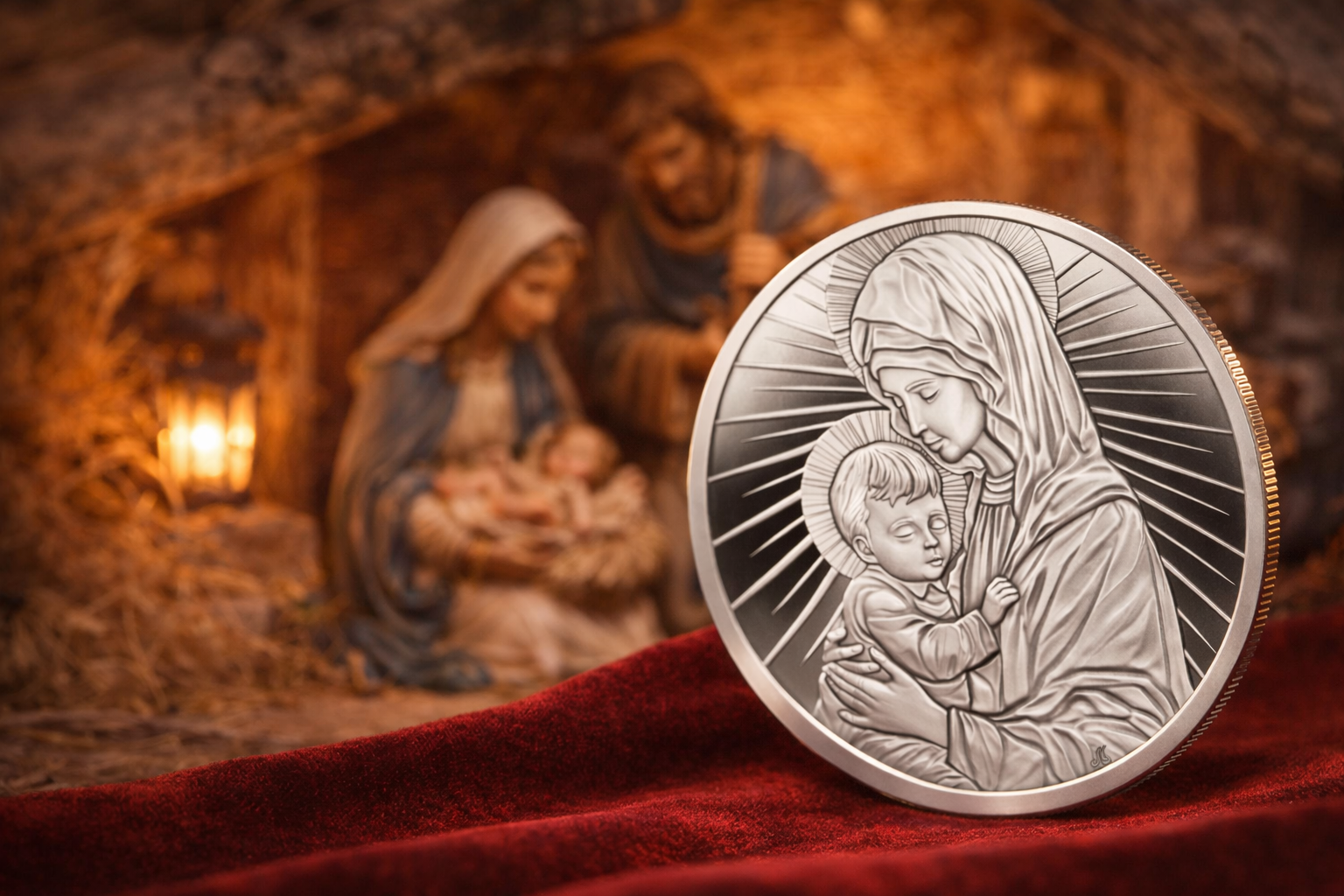
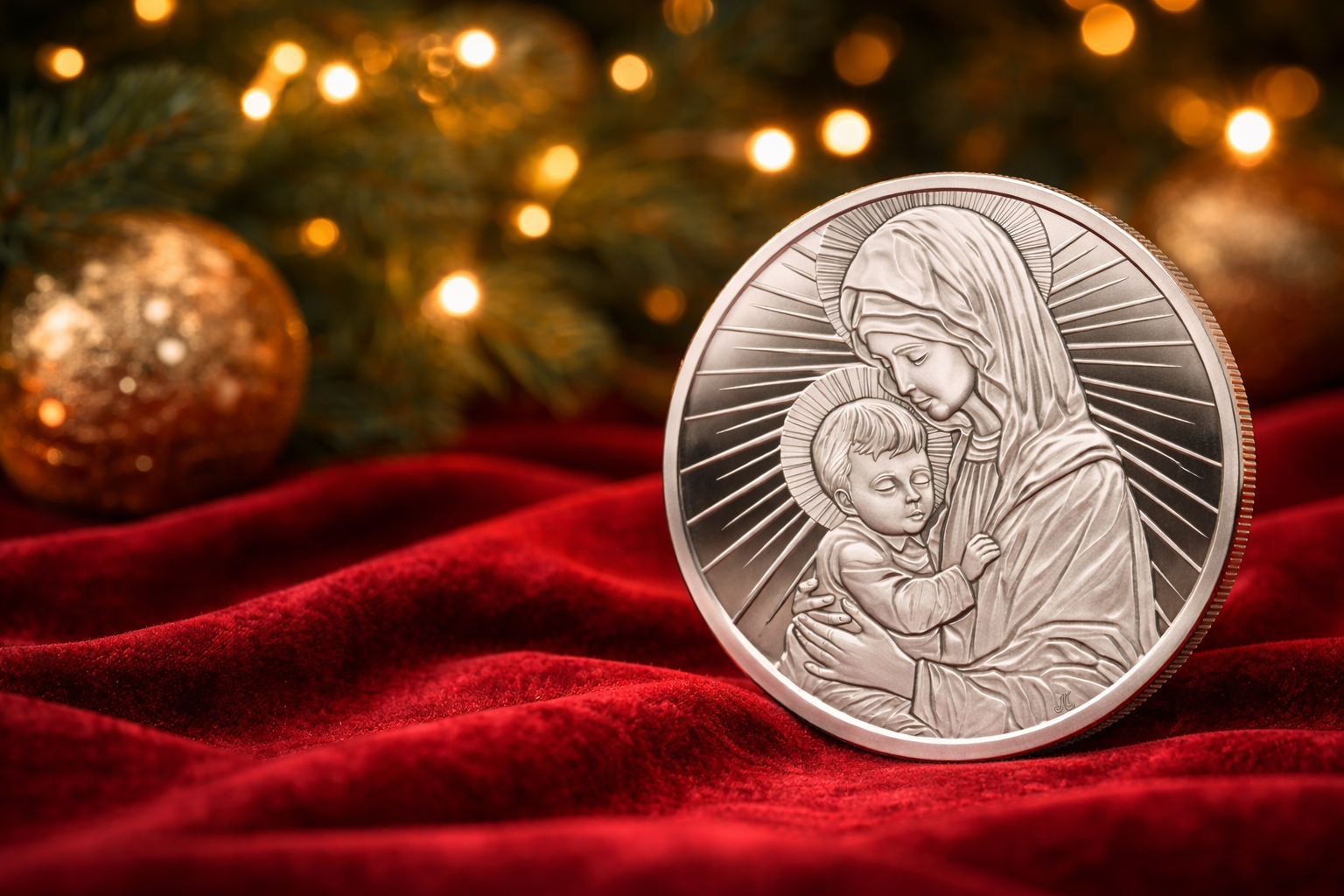
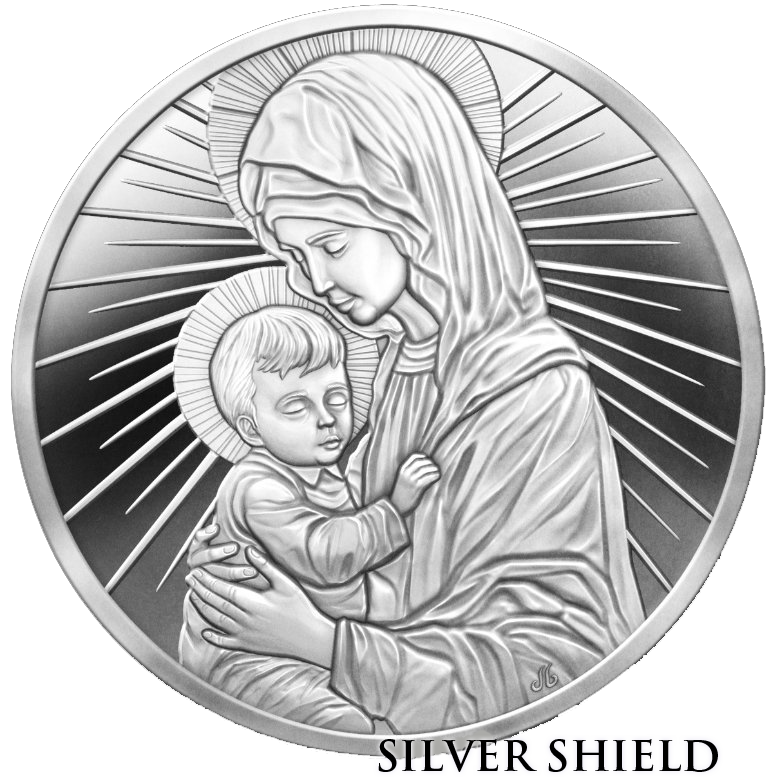
Chris’ new coin, Mother & Child, exemplifies all that Christmas means to the billions of Christians who live around the world. It is defined by the birth of the infant Jesus to His beloved Mother Mary.
A Tradition of Artistic Devotion Through the Ages
2025 "MOTHER AND CHILD" Silver Proof Coin, by Chris Duane
The Madonna and Child theme used for Chris’ Christmas coin also follows in a sacred tradition that began centuries ago and includes some of the most famous artists in the history of Western Civilization, including the Italian Renaissance painters Leonardo Di Vinci, Botticelli, and Raphael.
Many of these renowned painters produced more than one painting of the Blessed Mother with the infant Jesus, especially Raphael. His most successful composition, Sistine Madonna (1513), was commissioned by Pope Julius II for the church of San Sisto in Piacenza. It was commissioned in memory of the Pope’s uncle.
The Enduring Power of the Mother and Child Symbol
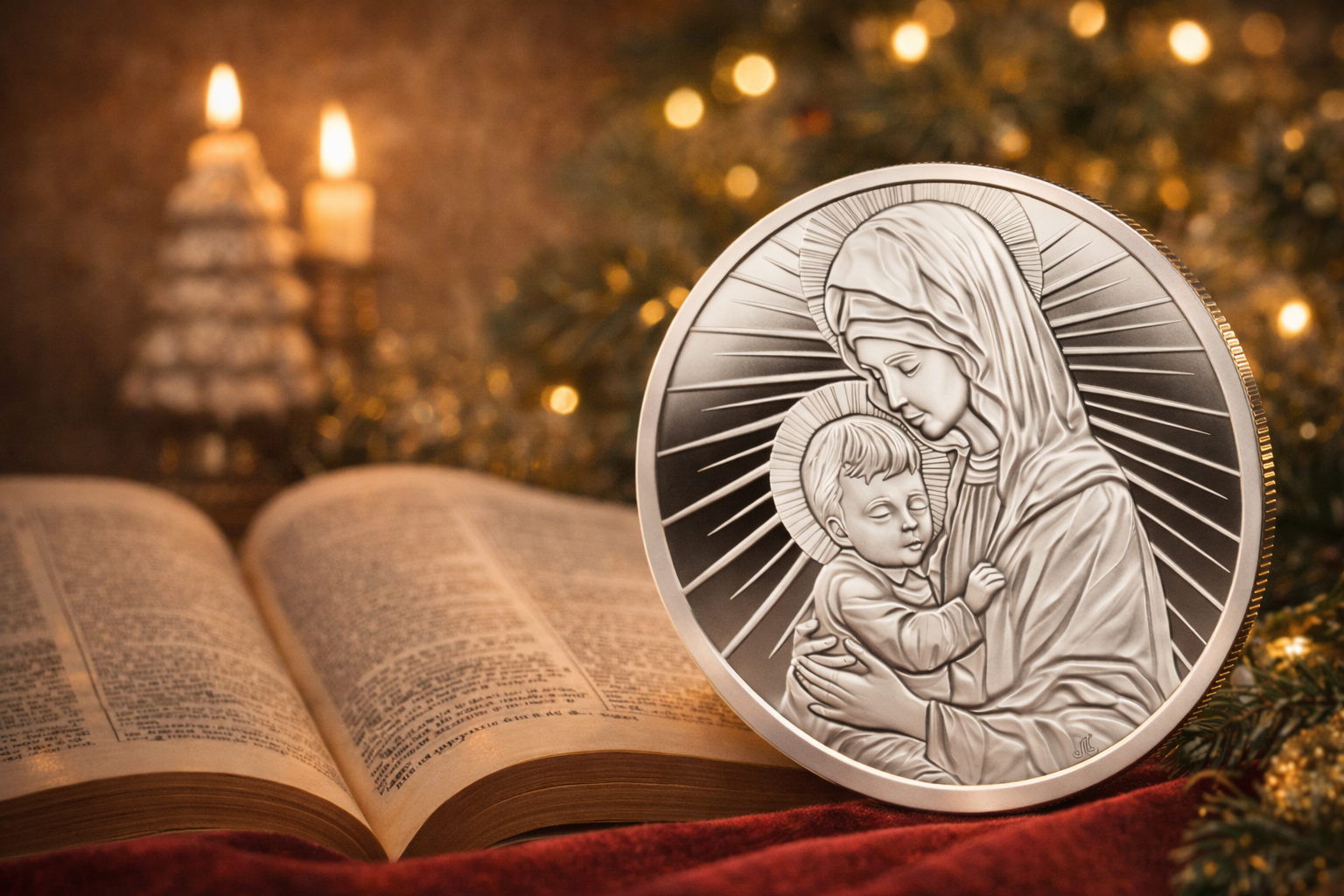
“MOTHER AND CHILD” Silver Coin from Silver Shield
Throughout history, both Catholic and Christian men have been captivated by the tenderness and love expressed by Mother Mary for her only child, Jesus. And, even in today’s secularized culture, the Bible’s retelling of the birth of Christ and His Mother’s devotion to her newborn Son, continues to inspire artists like Jason Jenicke. His digital artistry is primarily undertaken with Christian themes. Jenicke’s work is beguiling, especially his remarkably lovely creation titled, Madonna and Child (2025).
The earliest depiction of Mary holding the infant Jesus in her arms is from the late 2nd century. It is a partially intact fresco in the Catacombs of Priscilla in Rome. Another representation is sculpted into an elaborate marble sarcophagus of that same period, which shows Mary and the infant Jesus receiving the Magi.
The Byzantine Era and Sacred Mosaic Art
In 324 AD the Holy Roman Emperor Constantine I moved the capital from Rome to Constantinople and made Chrisitanity legal. The resultant Byzantine Empire lasted from 330 AD to 1454 AD. One of the religious masterpieces of this era is the enormous wall mosaic in the Hagia Sophia church depicting Mary holding the infant Jesus on her lap.
The Renaissance began in Europe in 1300 AD and lasted until 1600 AD. This prodigious epoch produced some of the most celebrated religious artwork ever created, including dozens of interpretations of the Mother and Child. These stellar images were painted by some of the most preeminent artists of their time, many of whom were mentioned earlier. These talented Italian artists, and many others, were the best the world has ever produced. This consortium of amazing artists also includes Filippo Lippi’s, who painted Madonna and Child (1465), Bellini who painted Madonna del Prato (1505) and Parmigianino, who created the revered painting titled, Madonna of the Long Neck (1537).
The astounding artistic rebirth, that blossomed during the 14th and 15th century, was predicated by the massive wealth acquired by European merchants who were trading along the Silk Road to China. They spent their newfound wealth to build palaces, churches, universities and cities and they decorated all of them with art, primarily religiously themed artwork.
Although the Catholic Church commissioned both Michaelangelo and Di Vinci to create works of art for their churches, many of the religious paintings created during this timeframe were commissioned by rich merchants, men who were personally very religious.
Raphael painted Madonna of the Meadow (1506) for the Florentine humanist Taddoe Taddei. The Medici family of Florence commissioned Luca Signorelli to paint Madonna and Child with Ignudi (1490). Florentine merchant Piero dei Pugliese commissioned Piero di Cosimo to paint a panel titled, Madonna and Child Enthroned with Sts. Peter, John the Baptist, Dominic and Nicholas of Bari, for their private chapel. The Renaissance was truly an artist’s paradise.
Post-Renaissance Interpretations of Mother and Child
The Mother and Child inspiration continued beyond the Renaissance when In 1670, Bartolome Esteban Murillo of Spain bequeathed us a serenely beautiful painting titled, Virgin and Child. In 1700, the Italian artist Felice Torelli, completed his thought-provoking painting titled, Virgin and Child with Angels and Saints.
The 19th century brought us the acclaimed Madonna and Child painting by Roberto Ferruzzi titled, Madonna of the Streets, which won the Venice Biennale in 1897. Two years later, in 1899, the French painter William-Adolphe Bouguereau created a masterpiece when he completed, The Virgin of the Lilies.
Unfortunately, the 20th and 21st centuries pale by comparison to the 16th and 19th century’s Mother and Child artwork. But, there are few exceptions. Marianne Stokes’, Madonna and Child (1905) is a stunning painting. And even, J. C. Leyendecker’s endearing Modern Madonna and Child, which he drew for the front cover of the December 23, 1922 issue of the Saturday Evening Post Magazine, deserves mentioning as well. The Spanish artist Salvador Dali produced a very unique painting titled, Madonna of Port Lligat in 1950. And, of course, we are currently graced with the wonderfully talented digital artist Jason Jenicke.
But, there is obviously an enormous void in the field of religious artwork today. One that desperately needs to be filled, and Chris’ new coin, Mother & Child, starts that journey.
A Sacred Journey Reborn in Silver
So, as you can see, the theme for Chris’ new coin, Mother & Child, can be traced back nearly 2000 years to the time of Christ’s birth and it embraces His mother’s profound love for her son. That devotion resonated with humanity centuries ago, and it still resonates with humanity today.
Alleluia!.






















































Other 2025 Silver Shield Proof Round releases