What Is the Eucharist? Meaning, Origins, and Importance in Christianity
All Catholic churches and all Protestant churches, other than the Quakers, utilize some form of Christ’s Last Supper teachings, regarding the Eucharistic ceremony, during their services.
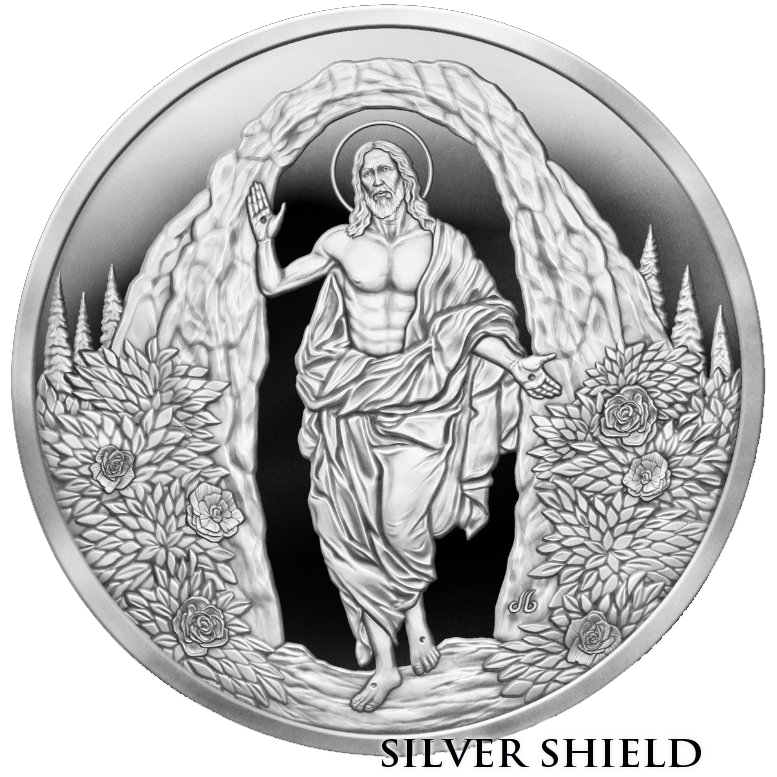
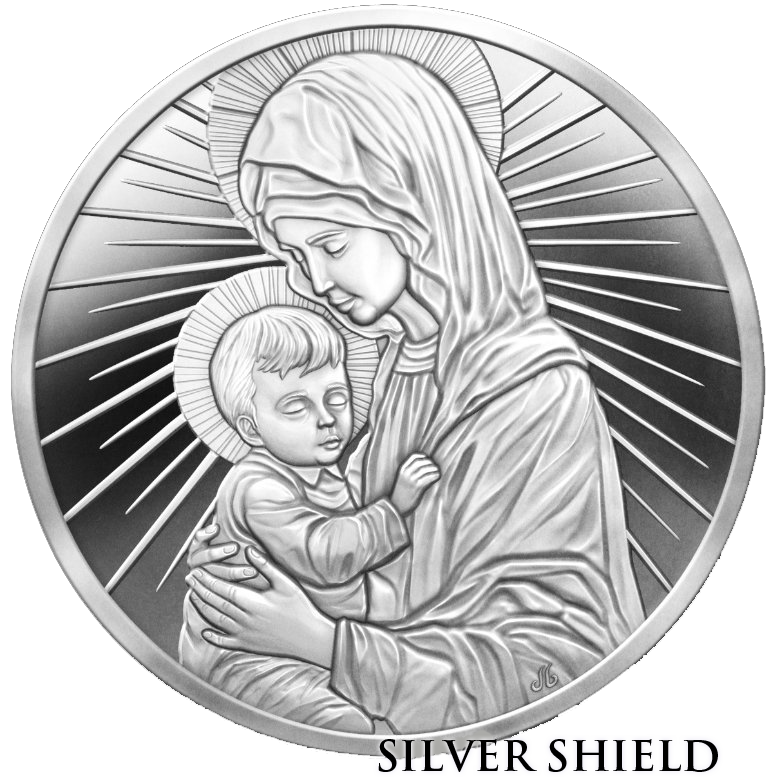
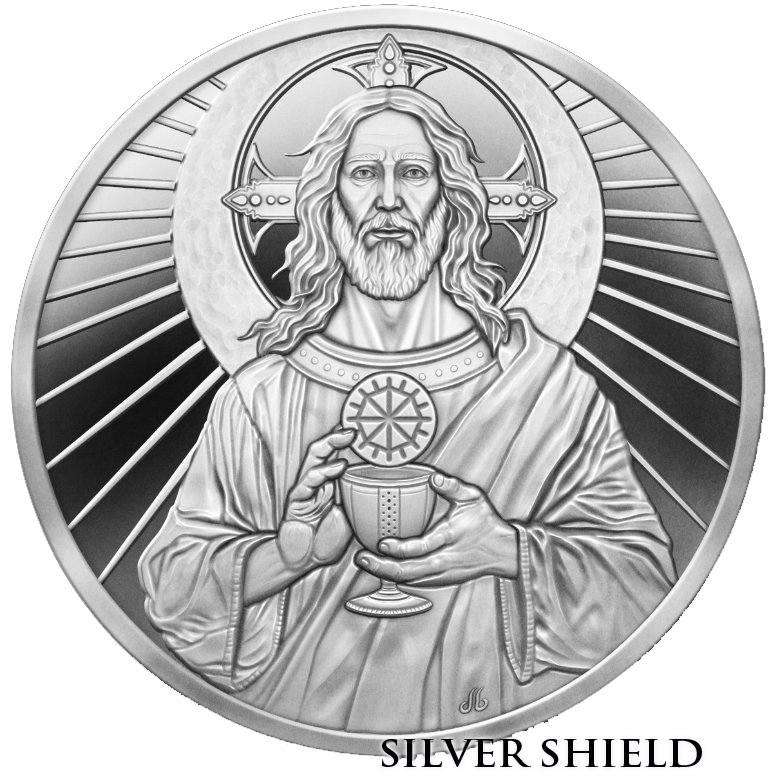
2025 "EUCHARIST" Silver Proof Coin, by Chris Duane
The reason for this is that the Eucharist is the fundamental foundation for all of their services. Without the Eucharist, which comes from the Greek for “thanksgiving”, the service would be simply another gathering of like-minded people.
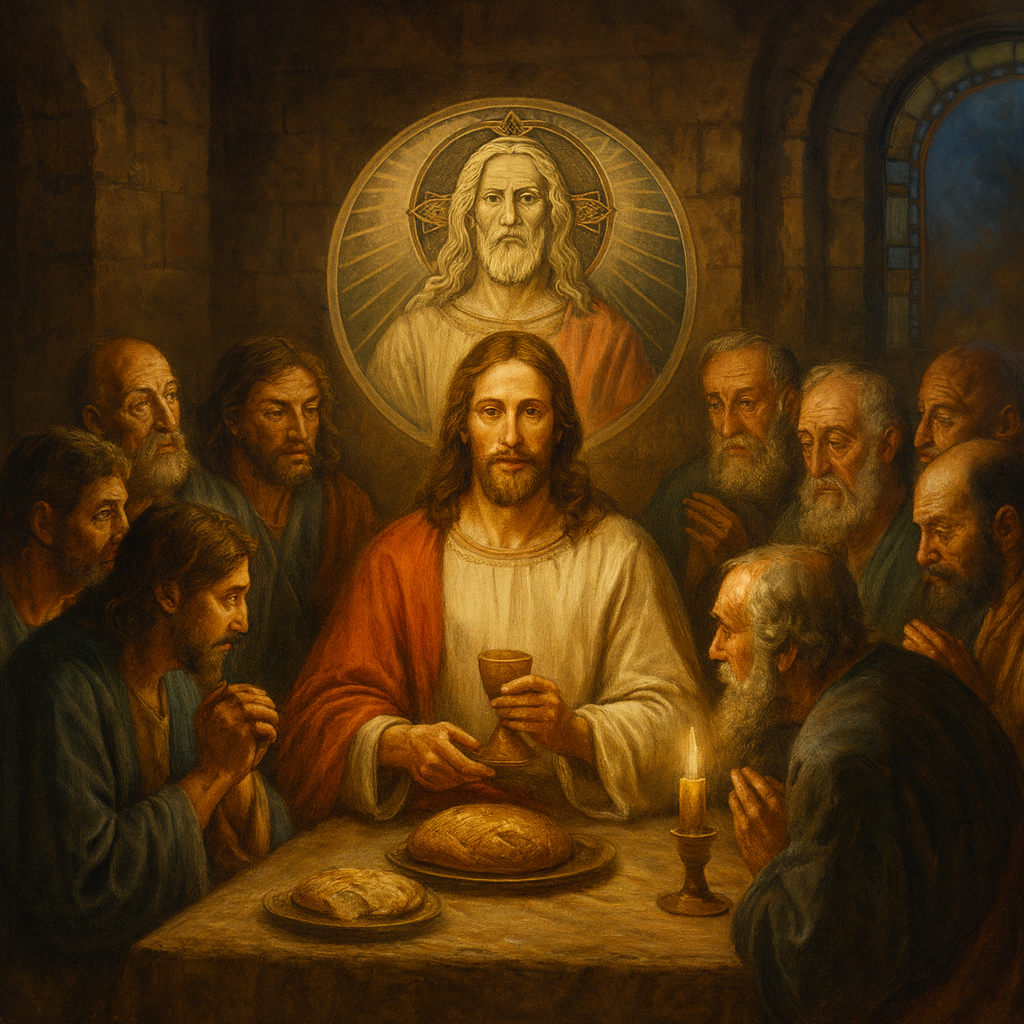
“EUCHARIST” Silver Coin from Silver Shield
The Biblical Origins of the Eucharist
The Eucharist was bequeathed to Christians by Christ and this gift is beautifully represented by Chris’ new coin, Eucharist. Jesus knew His death was imminent. And He also knew that His departure from this world would be devastating for his disciples. So, He literally left part of Himself behind as a reminder of His continued presence in His disciple’s lives.
This profound event took place during the Last Supper, while Christ was surrounded by His faithful Twelve Apostles. According to the eyewitness account of St. Matthew, it was during this last meal, and just prior to Jesus’ Crucifixion, that Jesus held bread in His hands and said the words, “Take, eat; this is my body”.
Once completed, Jesus then took the cup of wine and said, “This is my blood of the covenant, which is poured out for many for the forgiveness of sins.” This momentous occurrence is recorded in the Bible by St. Matthew - Matthew 26:26-28. With these simple words Christ changed the world forever. Not only was He taking on the sins of the world through His Passion and death, but humanity could now attain eternal life through Him and with Him.
Gospel Accounts of the Eucharist
St. Mark also relayed his experience in Mark:14:22-24 when he wrote, “While they were eating, He took bread, said the blessing, broke it, and gave it to them, and said, “Take it; this is my body.” Then he took the cup, gave thanks, and gave it to them, and they all drank from it. He said to them, “This is my blood of the covenant, which will be shed for many.”
St. Luke in Luke 22:19-20 explains his experience that day as well when he wrote, “Then He took the bread said the blessing broke it, and gave it to them, saying, “This is my body, which will be given for you; do this in memory of me.” and likewise the cup after they had eaten, saying, “This cup is the new covenant in my blood, which will be shed for you.”
St. John, who wrote most of the Bible and who also witnessed this first Eucharist ceremony along with the remainder of the Apostles wrote (John 6:35), “Jesus said to them, “I am the bread of life; whoever comes to me will never hunger, and whoever believes in me will never thirst.” This is especially true for Catholics, as they believe the transformation of the bread and wine into the body and blood of Christ is the most important part of the Mass.
St. John also recorded Jesus’ further explanation of the importance of the Eucharist when he wrote in John 6:51-58, “I am the living bread that came down from Heaven; whoever eats this bread will live forever; and the bread that I will give is my flesh for the life of the world.' The Jews quarreled among themselves, saying, “How can this man give us (His) flesh to eat?” Jesus said to them, “Amen, amen, I say to you, unless you eat the flesh of the Son of Man and drink His blood, you do not have life within you. Whoever eats my flesh and drinks my blood has eternal life, and I will raise him on the last day. For my flesh is true food, and my blood is true drink. Whoever eats my flesh and drinks my blood remains in me and I in him. Just as the living Father sent me and I have life because of the Father, so also the one who feeds on me will have life because of me. This is the bread that came down from Heaven. Unlike your ancestors who ate and still died, whoever eats this bread will live forever.” As you can see, Christ literally left part of Himself here on earth to feed His children and those who fail to follow His teachings are at risk of dying twice, both physically and spiritually.
The Apostle Paul’s Letters to the Corinthians
Luckily for us, the Corinthians, who lived in the southern city of Corinth in Greece, were a start-up community of Christians that required an inordinate amount of guidance, correction and advice from St. Paul. Through St. Paul’s letters to this group of struggling believers, we are blessed with first hand knowledge of what Jesus intended Christians to do once He was gone.
St. Paul not only admonished, and corrected, this wayward community but also recorded the startling event that took place at the Last Supper when he quoted Jesus, in 1 Corinthians 11:24-25, as saying, “Do this in remembrance of me.” St. Paul also explained in Corinthians 10:16-17 the binding and unifying nature of the Eucharist as well, when he wrote, “The cup of blessing that we bless, is it not a participation in the blood of Christ? The bread that we break, is it not a participation in the body of Christ? Because the loaf of bread is one, we, though many, are one body, for we all partake of the one loaf.”
Catholic vs. Protestant Beliefs About the Eucharist
Although all Catholic churches use the same ceremony, which was bequeathed to them directly by Christ and in which their ordained priests transform the bread and wine into the REAL body and blood of Christ, the Protestants' beliefs and protocols vary.
Unlike the Catholics, most Protestant churches do not believe that the bread and wine is transformed into the actual body and blood of Christ. Nor do they believe that communion should be received at least once a week. Protestant denominations only believe the Eucharist is a “representation” of Christ’s body and blood. The Lutherans believe that Christ is “in, with and under” the bread but, that it is not really Christ’s body and blood. Other denominations believe the bread and wine is symbolic of Christ’s presence. While others believe the bread and wine simply represents Christ’s spiritual presence during their services.
Some Protestant churches use grape juice rather than wine. Unlike the Catholics, who approach the altar to receive communion, some denominations of Protestants pass a tray of hosts along the pew where the parishioners take one for themselves. Others use real leavened bread rather than unleavened bread of the hosts.
Shared Requirements for Communion
Although, there is one aspect of communion that both the Catholics and the Protestants agree upon, and that is that only those people who are baptised in their particular faith are allowed to receive Holy Communion in their churches. Protestants cannot receive communion in Catholic churches, nor can Catholics, or any other Protestant denominations, receive communion in other Protestant denominations churches.
So, as you can see, whether you are a Catholic, or a Protestant, receiving the Eucharist during Communion remains the core purpose for attending church services, and Chris’ new coin, Eucharist, reflects that powerful reverence for Christ and His teachings.

































Other 2025 Silver Shield Proof Round releases